Description:
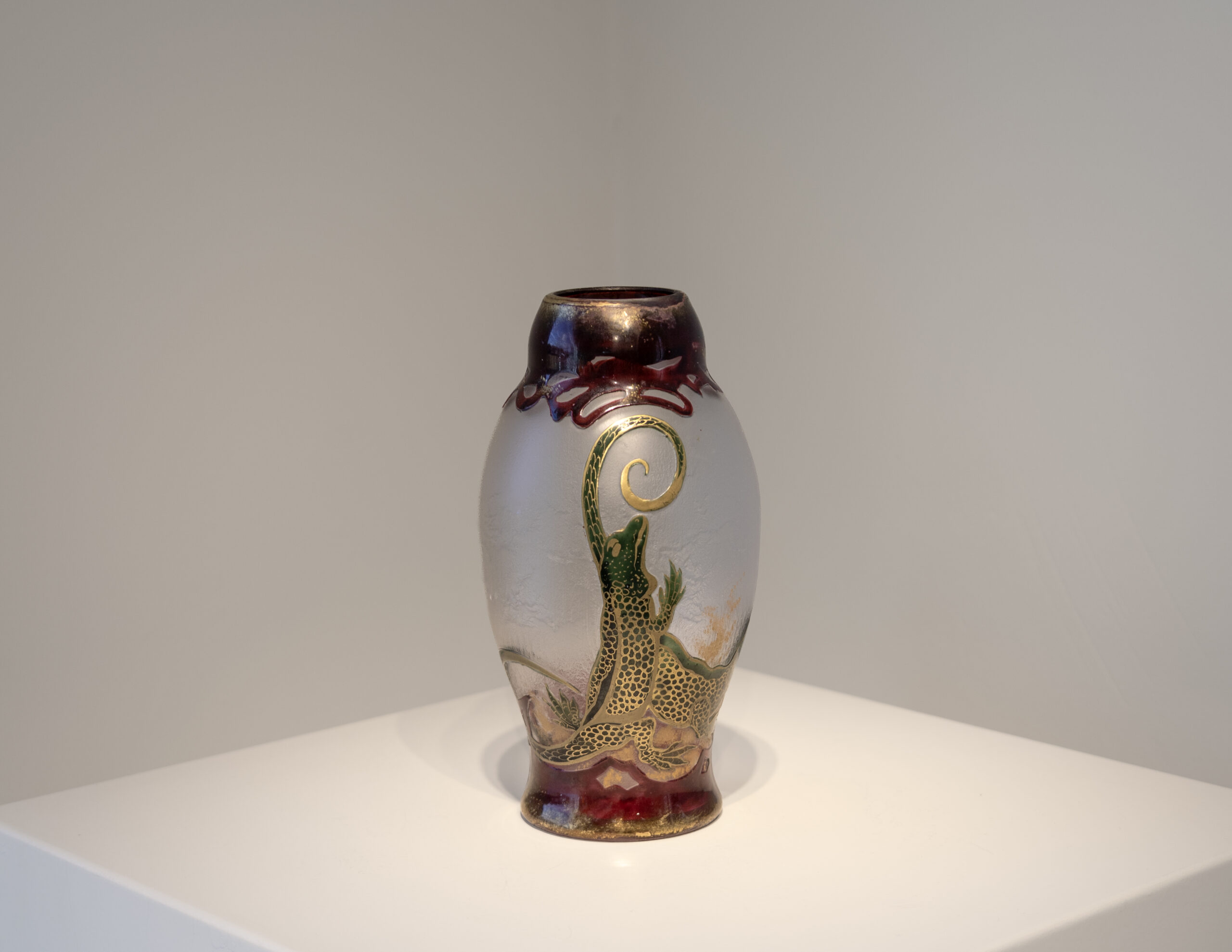
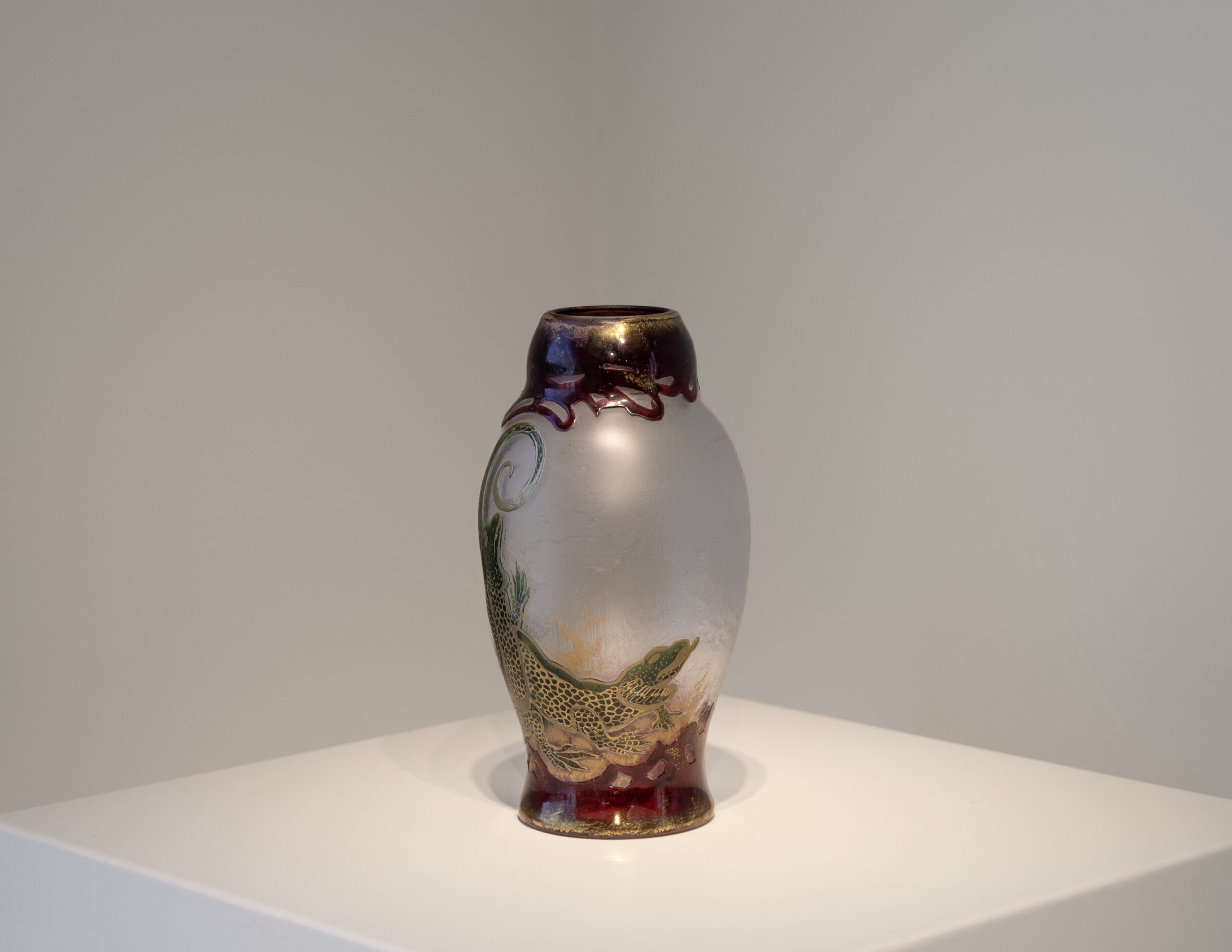
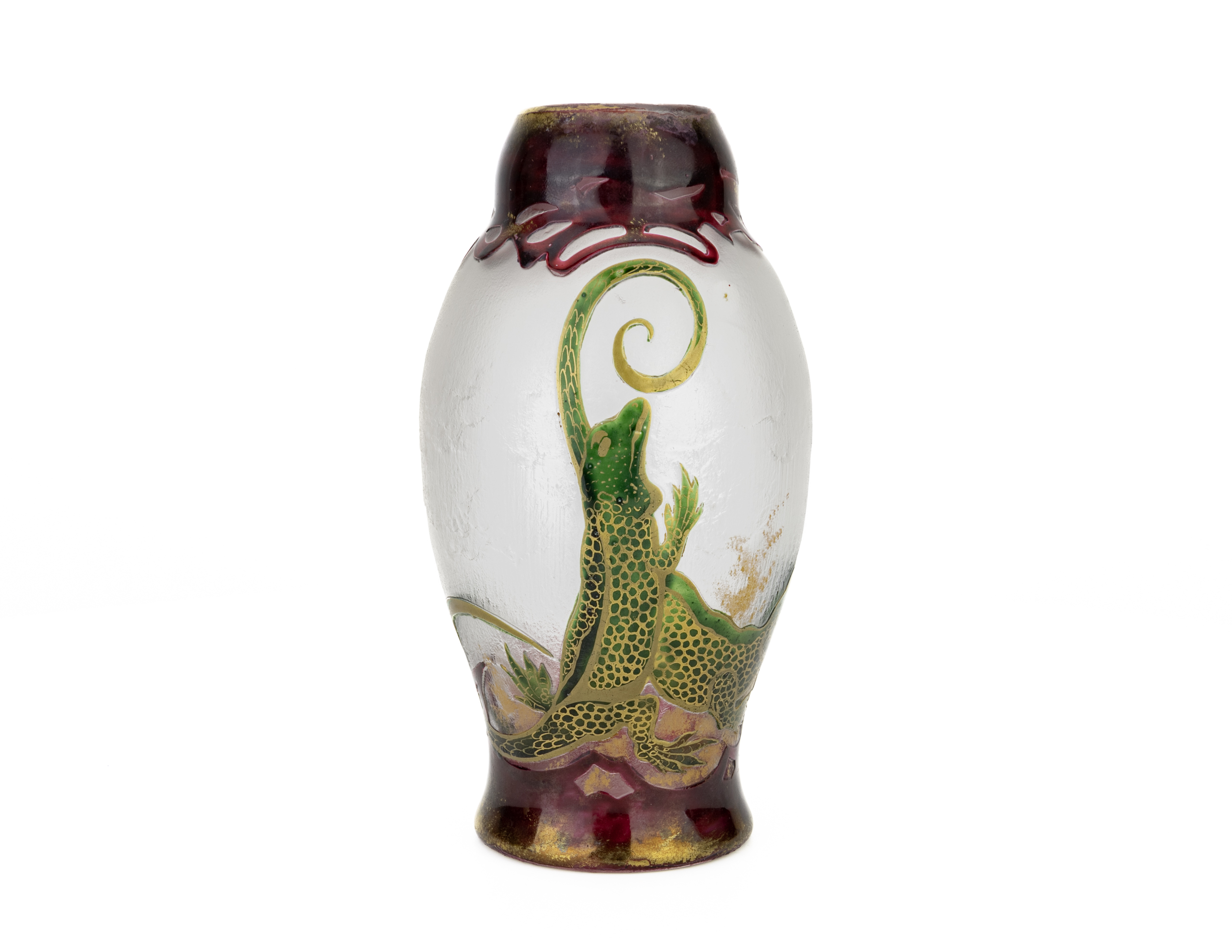
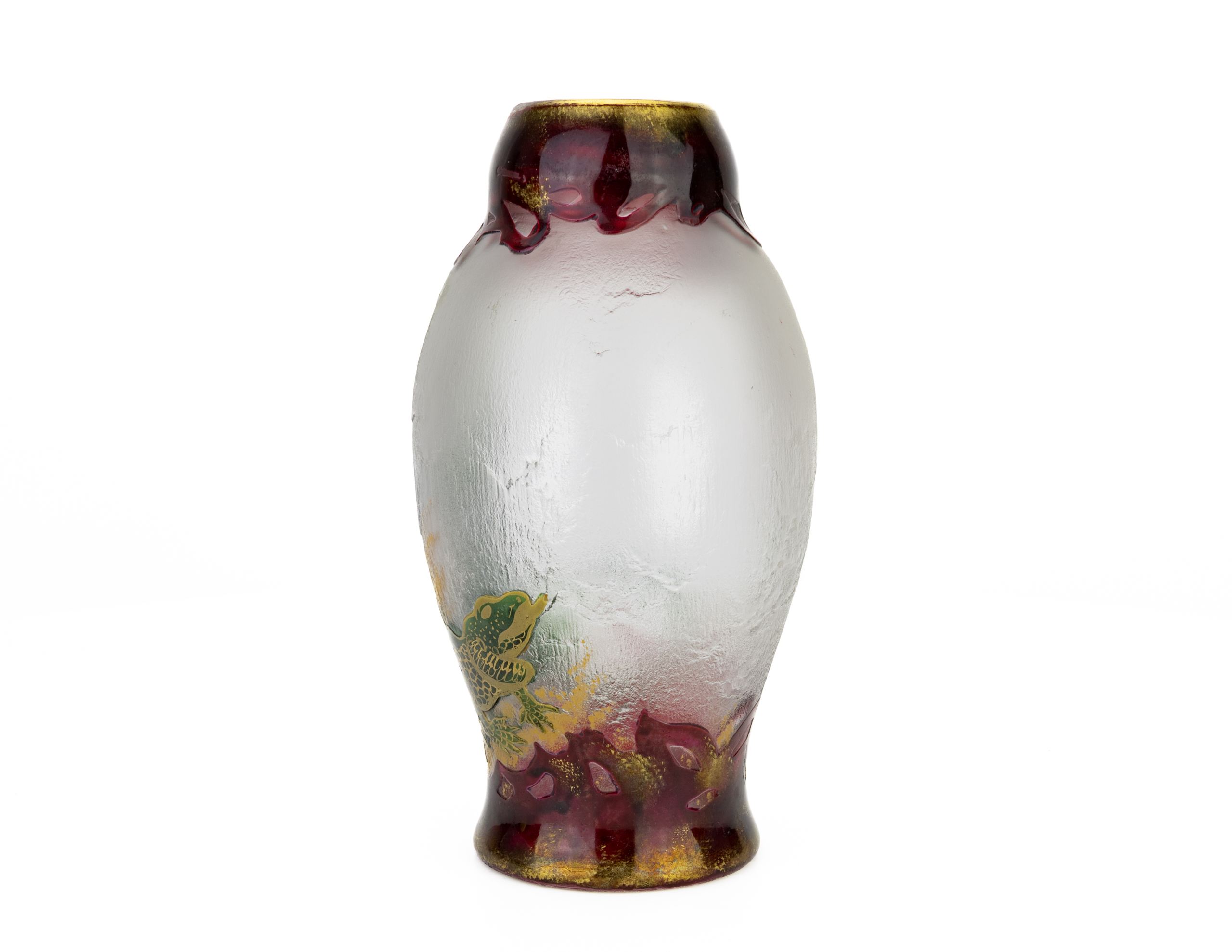
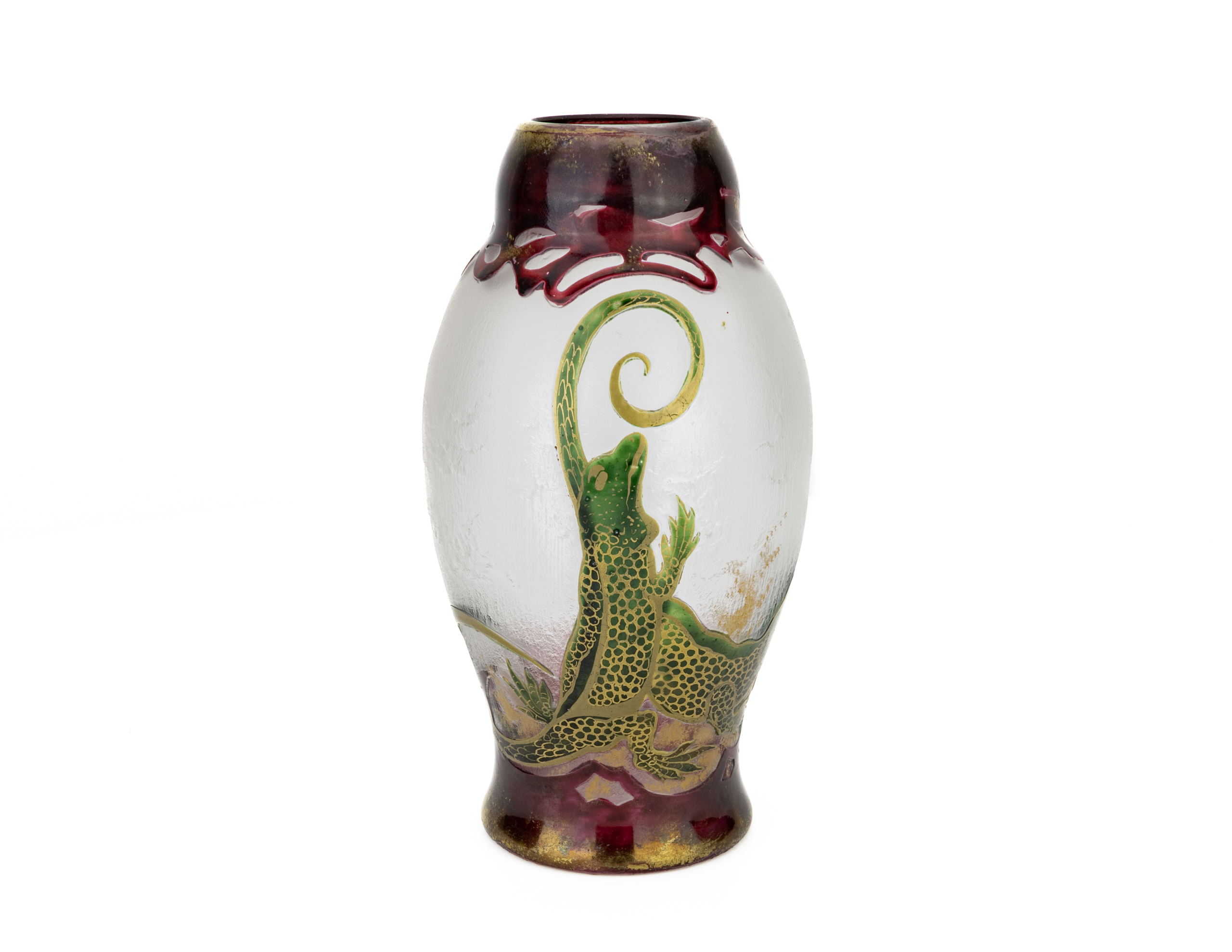
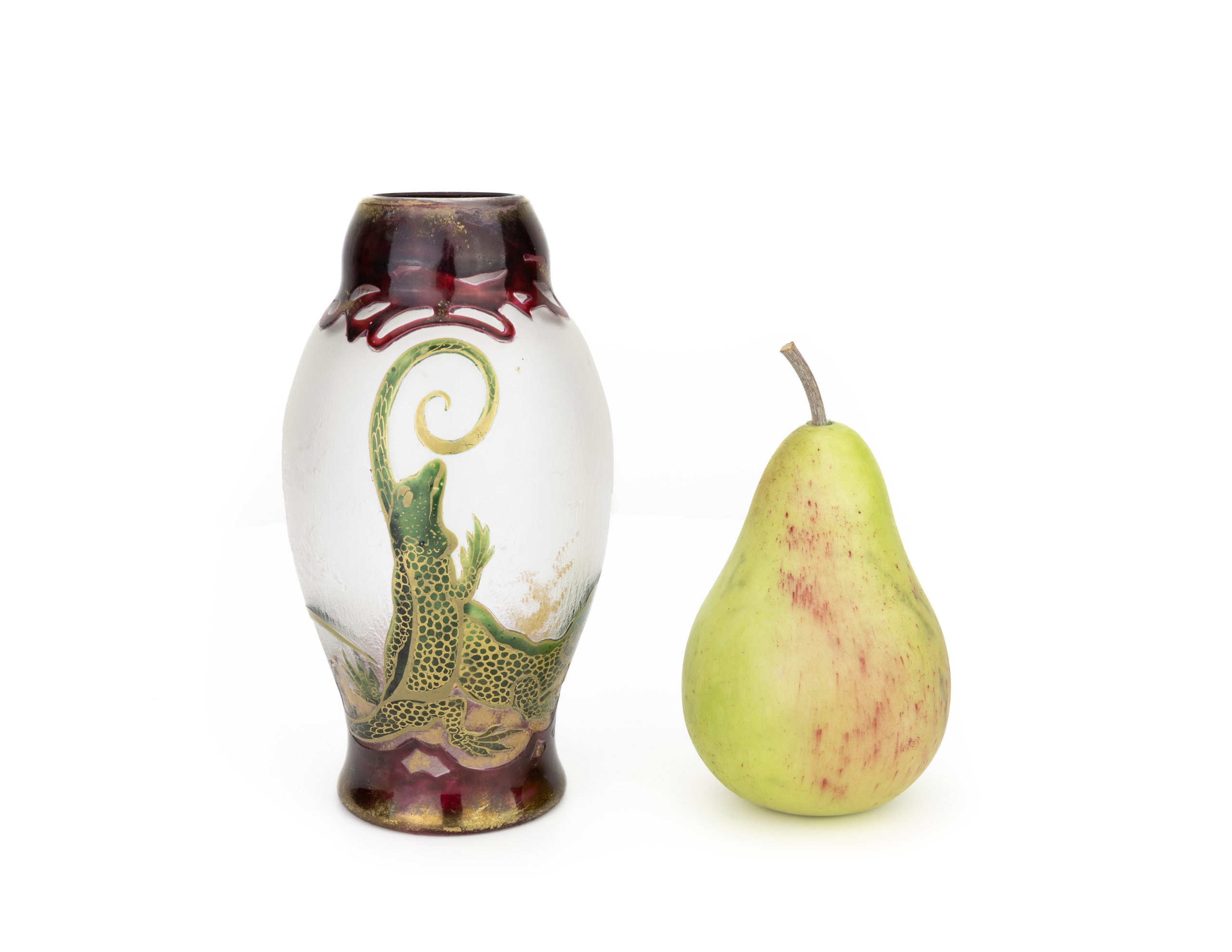
This exceptional Jugendstil vase was produced in Bohemia around 1900 and can be attributed, on stylistic and technical grounds, to the glass-refining workshop of Carl (Karl) Goldberg in Haida, present-day Nový Bor.
Around 1900, Carl Goldberg was among the artistically prominent glass refiners of Northern Bohemia. Goldberg began with a glass-painting workshop in 1881 and, together with Josef Kreysa, established a glass-refining workshop in 1891. In 1897, the company relocated to Haida, then one of Europe’s most important centres for glass production and refinement. The firm specialised in luxury glass and employed a wide range of technically demanding decorative techniques. Goldberg also presented his work internationally; at the 1900 Paris Exposition, his luxury glassware was praised for its technical complexity and refined execution.
Goldberg’s oeuvre remains only sparsely documented today. Moreover, the production of the various glass-refining workshops in Haida and nearby Steinschönau often displays strong stylistic and technical similarities, making the precise attribution of unsigned objects difficult. Nevertheless, comparison with objects attributed to Goldberg that display the same distinctive techniques and stylistic vocabulary allows this vase to be convincingly attributed to his workshop.
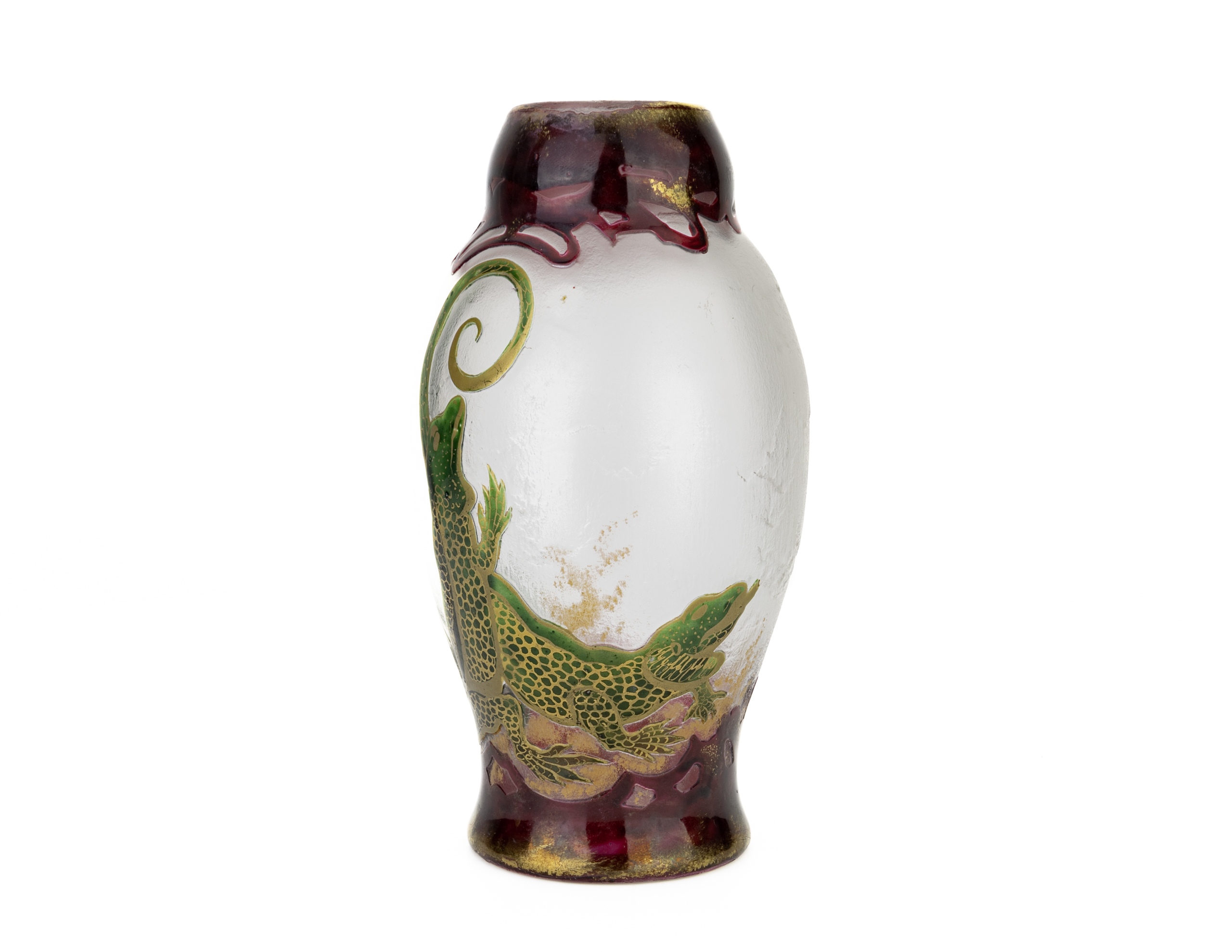
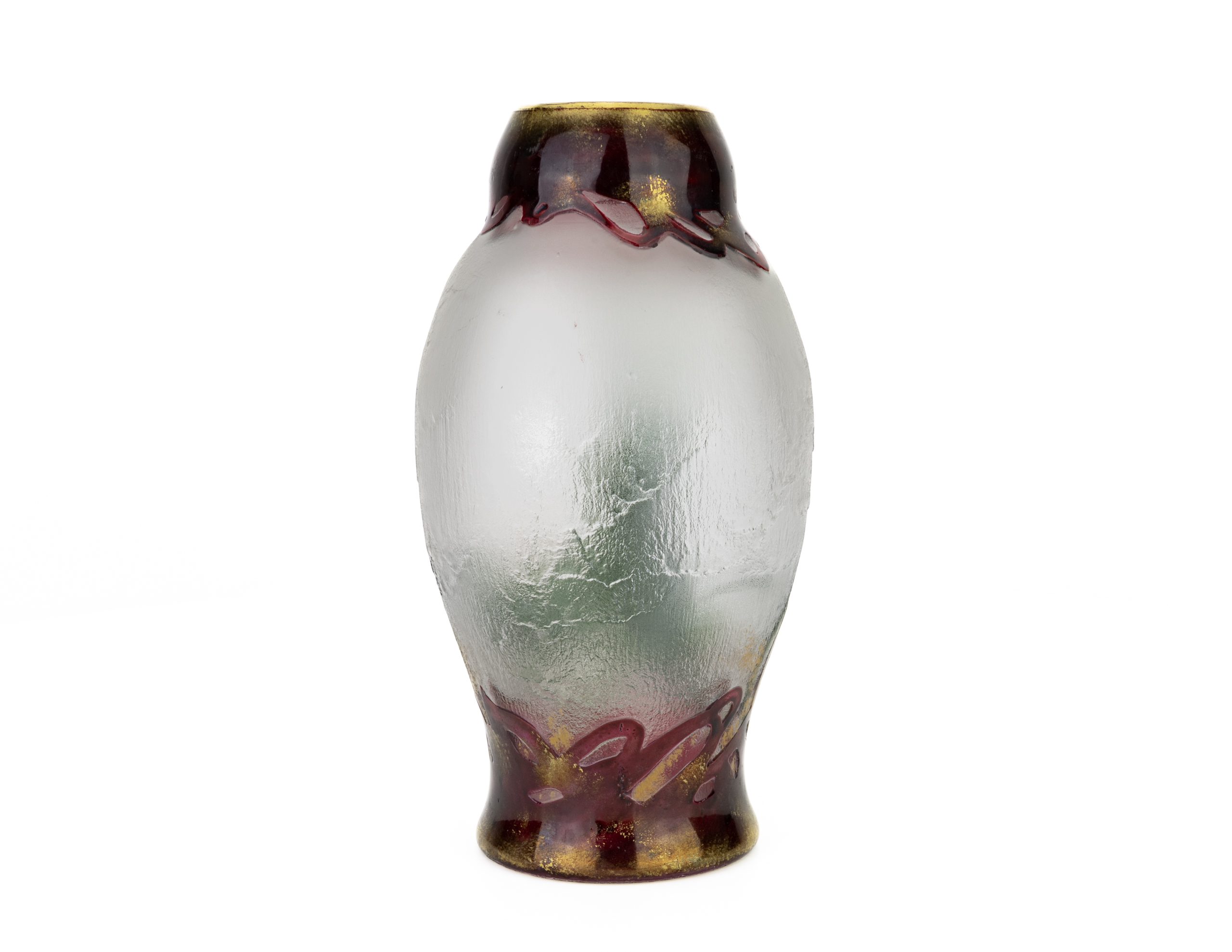
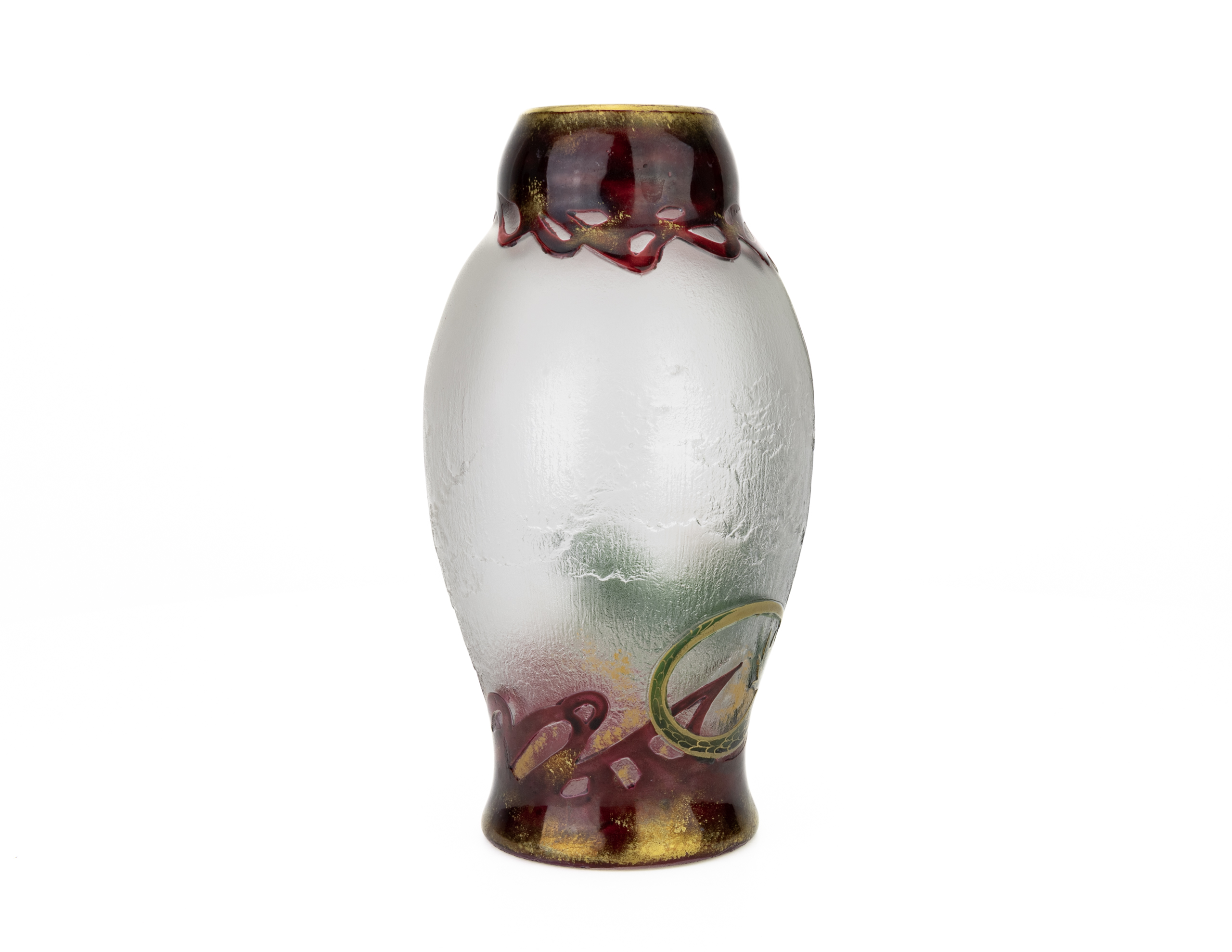
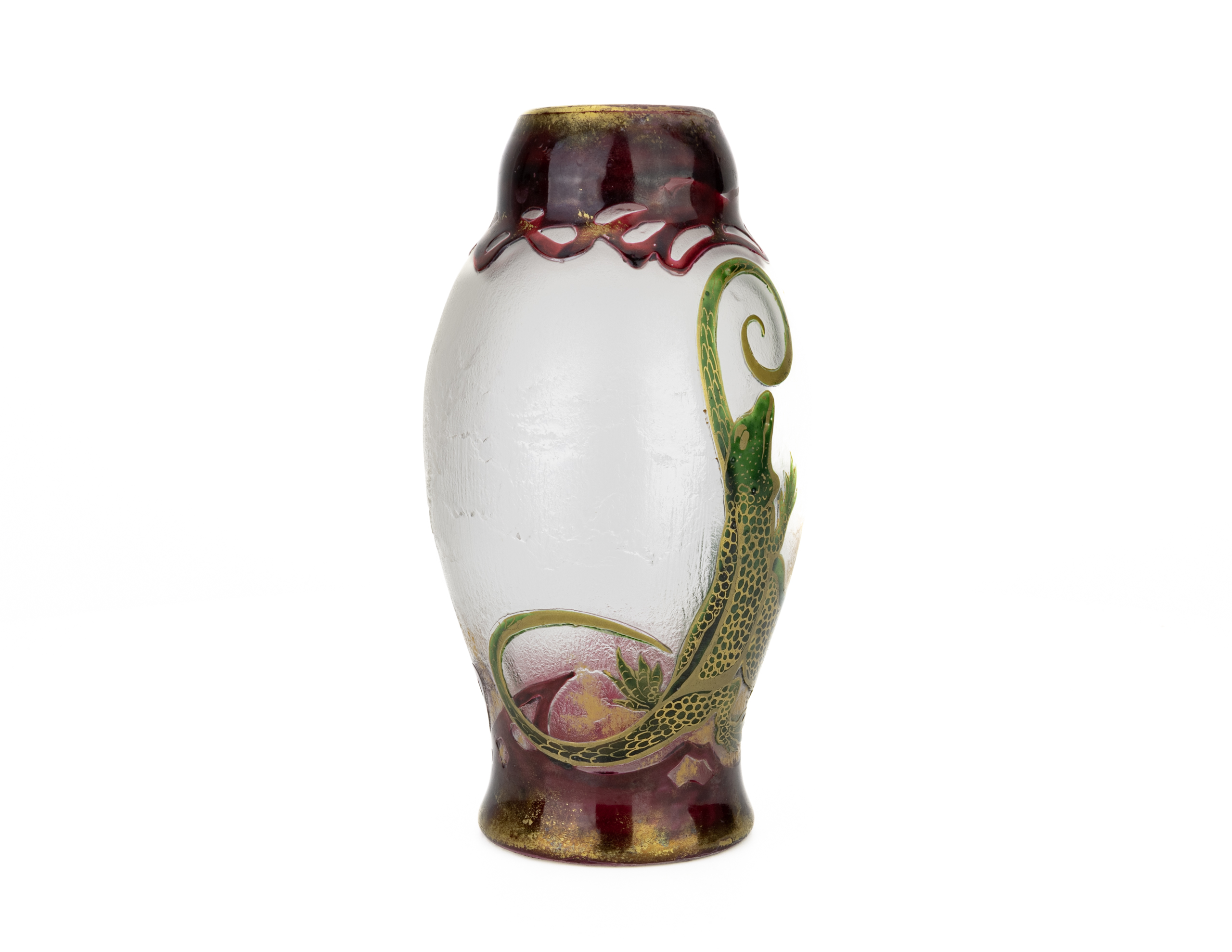
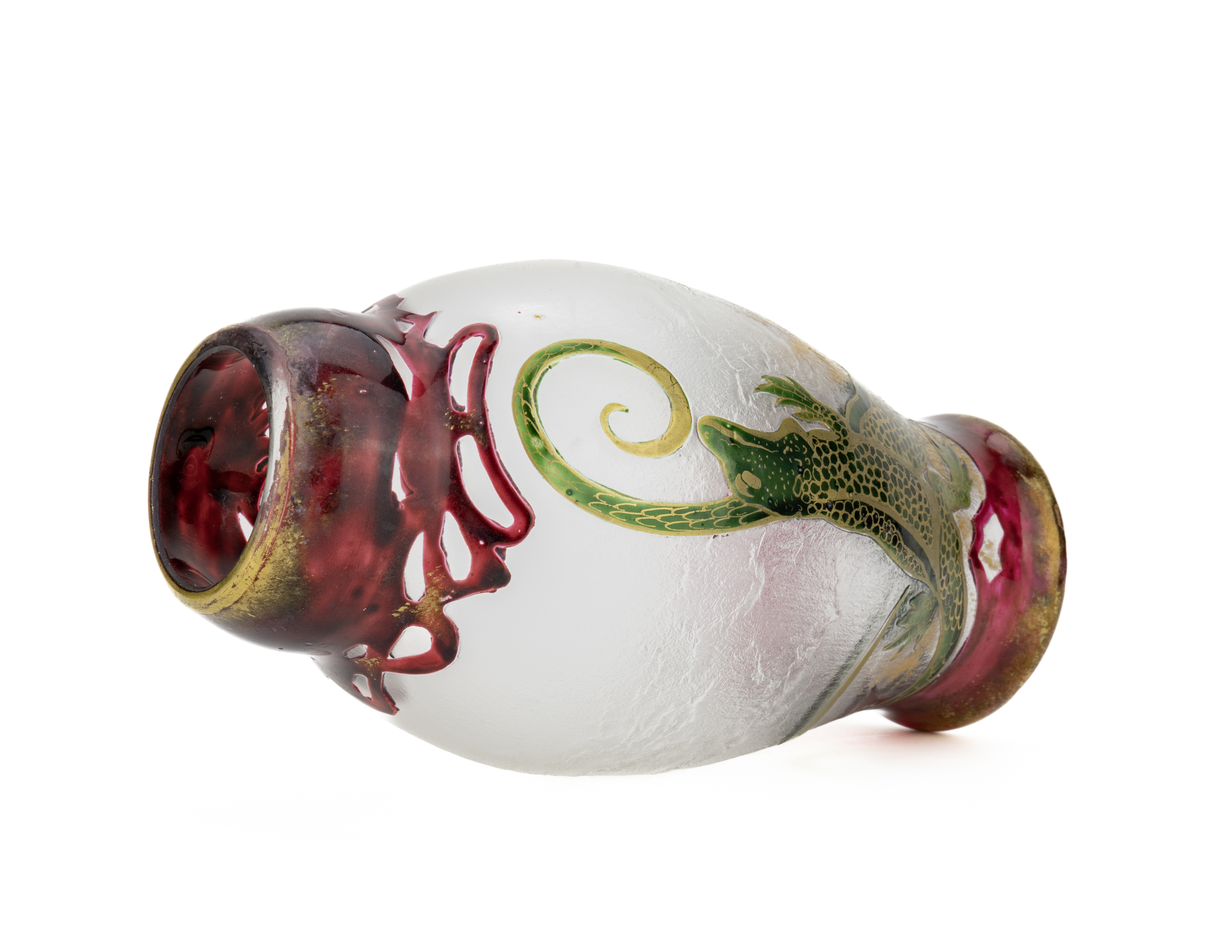
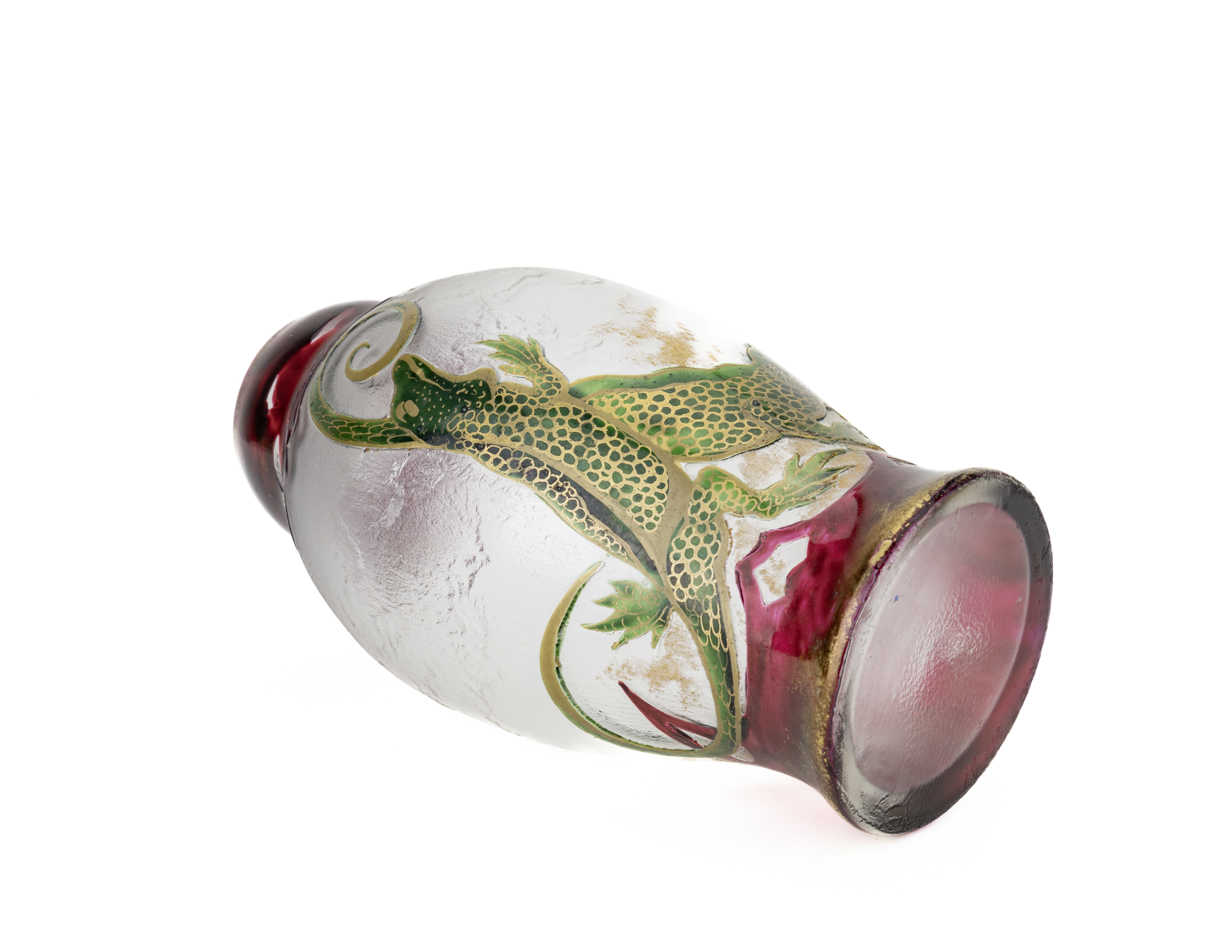
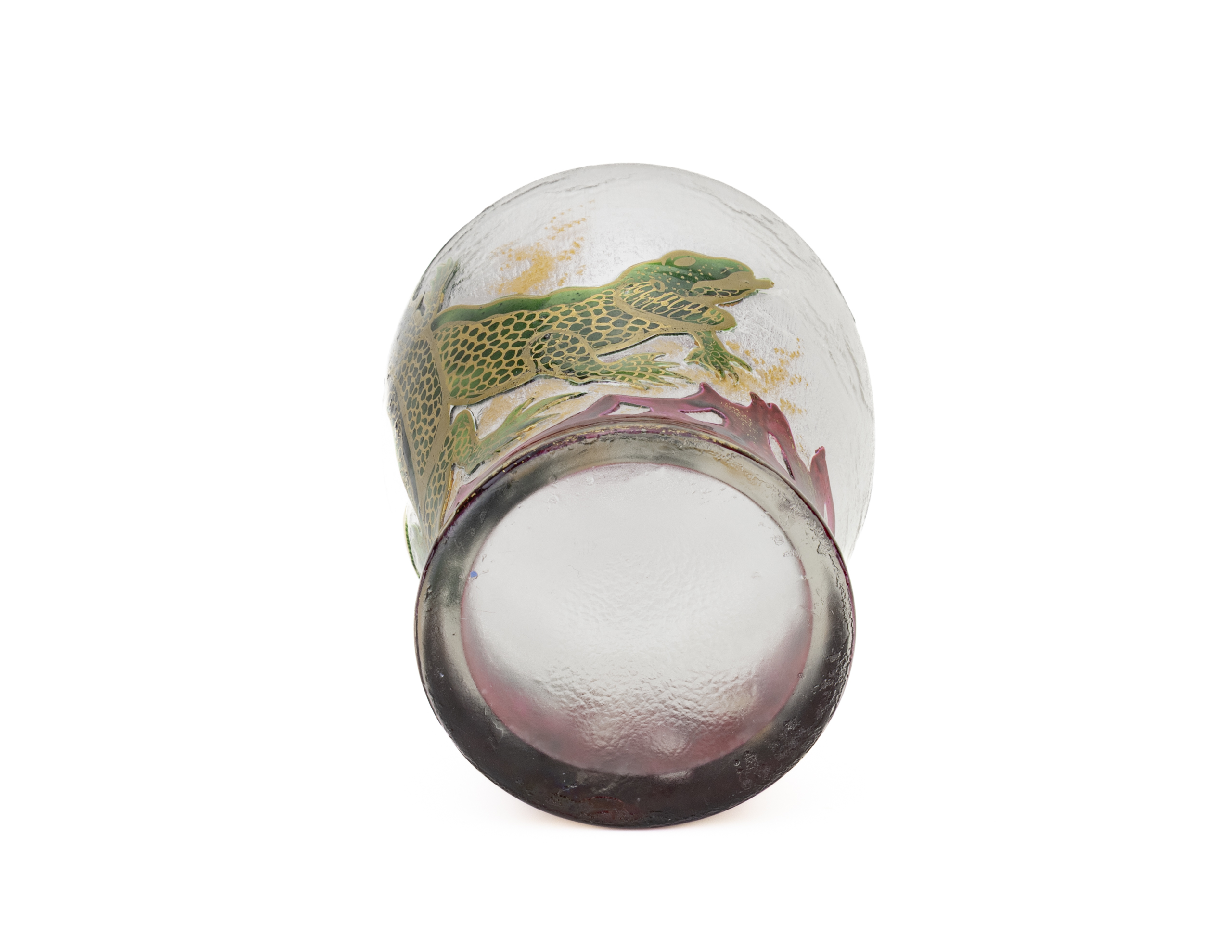
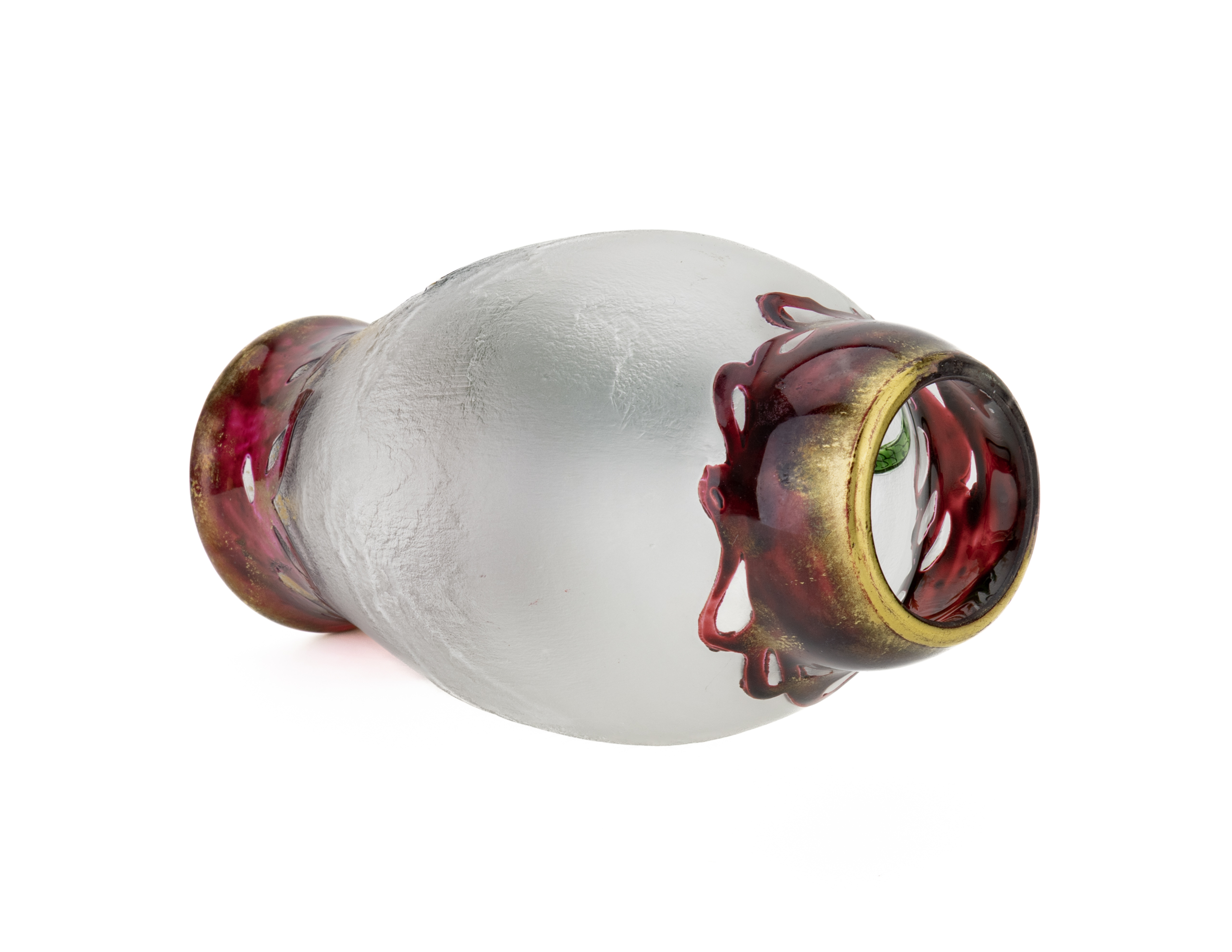
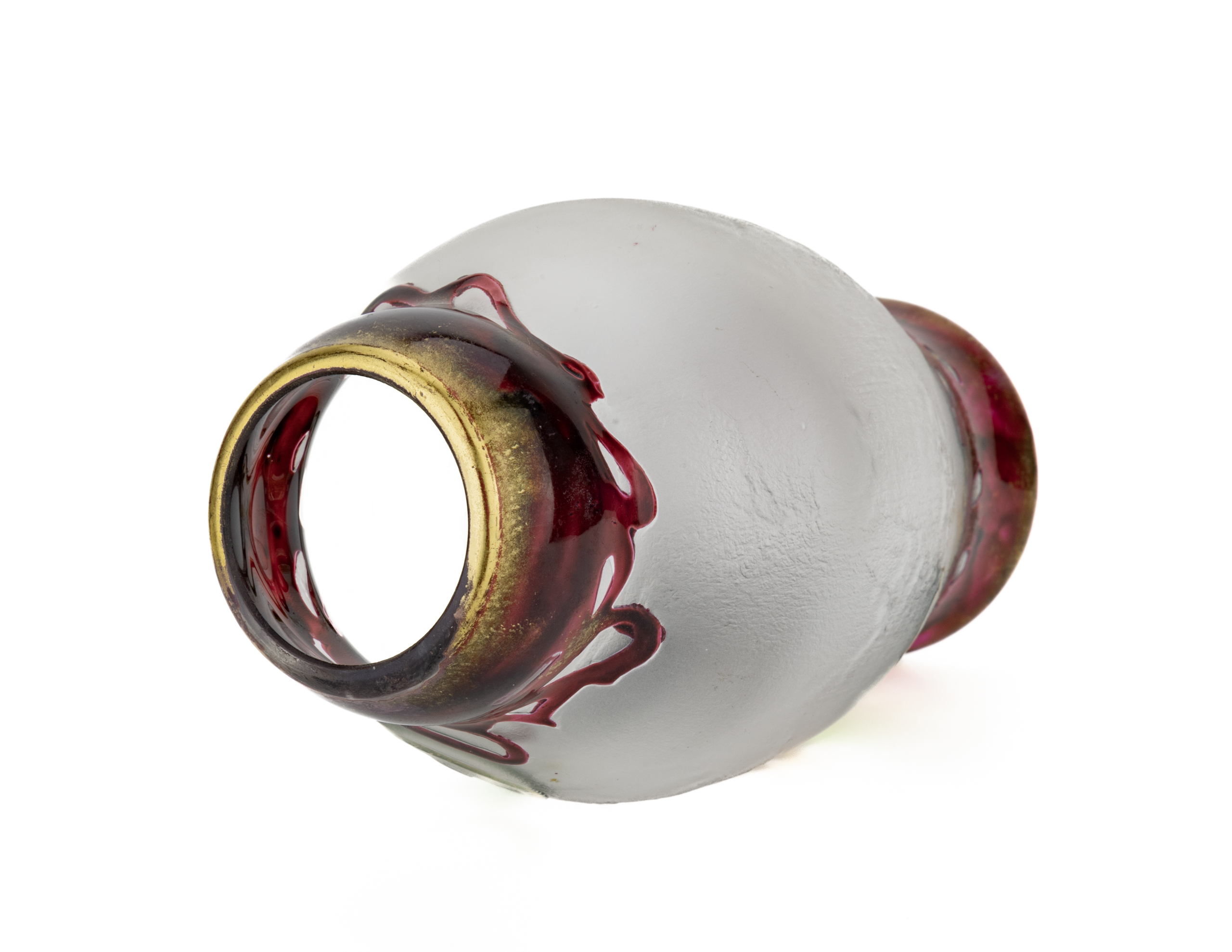
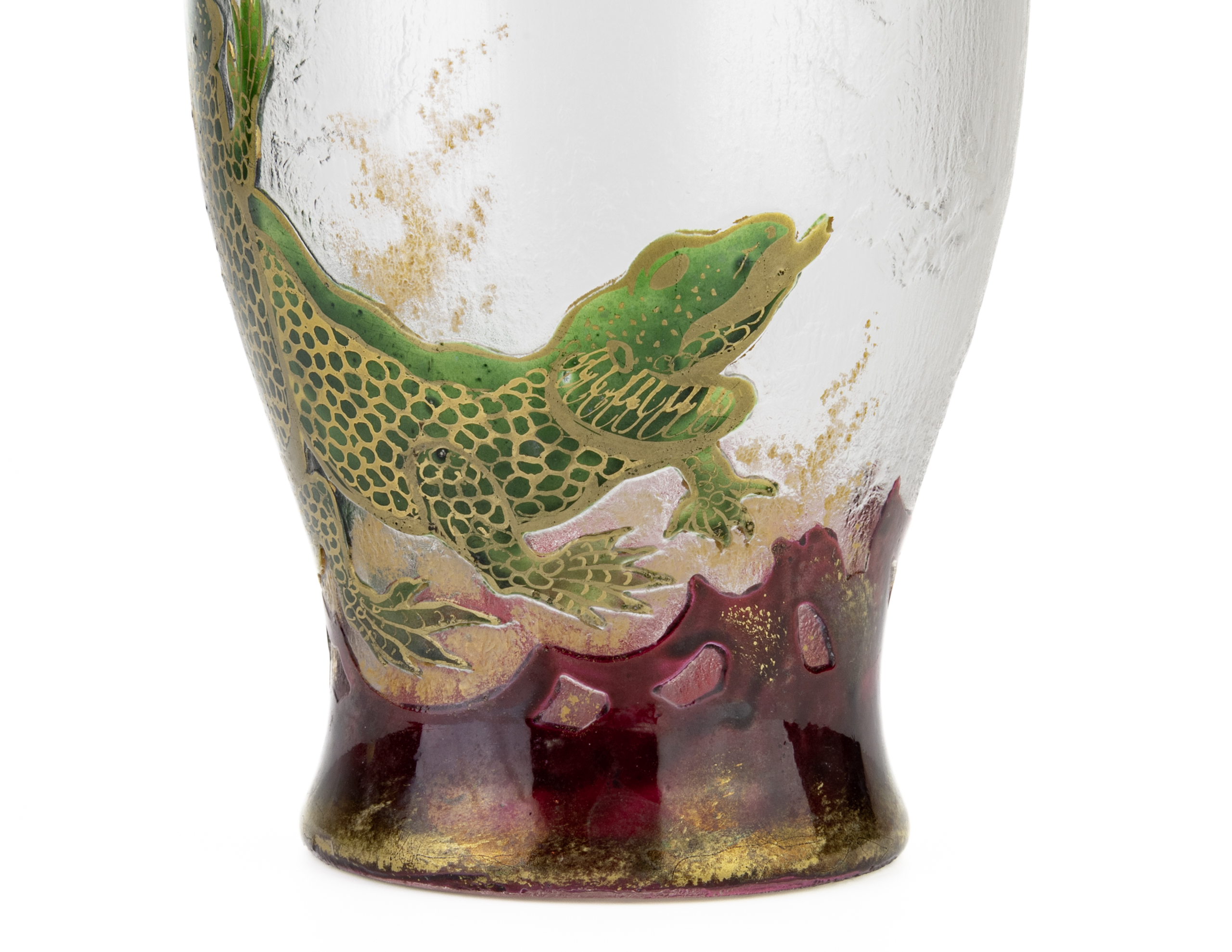
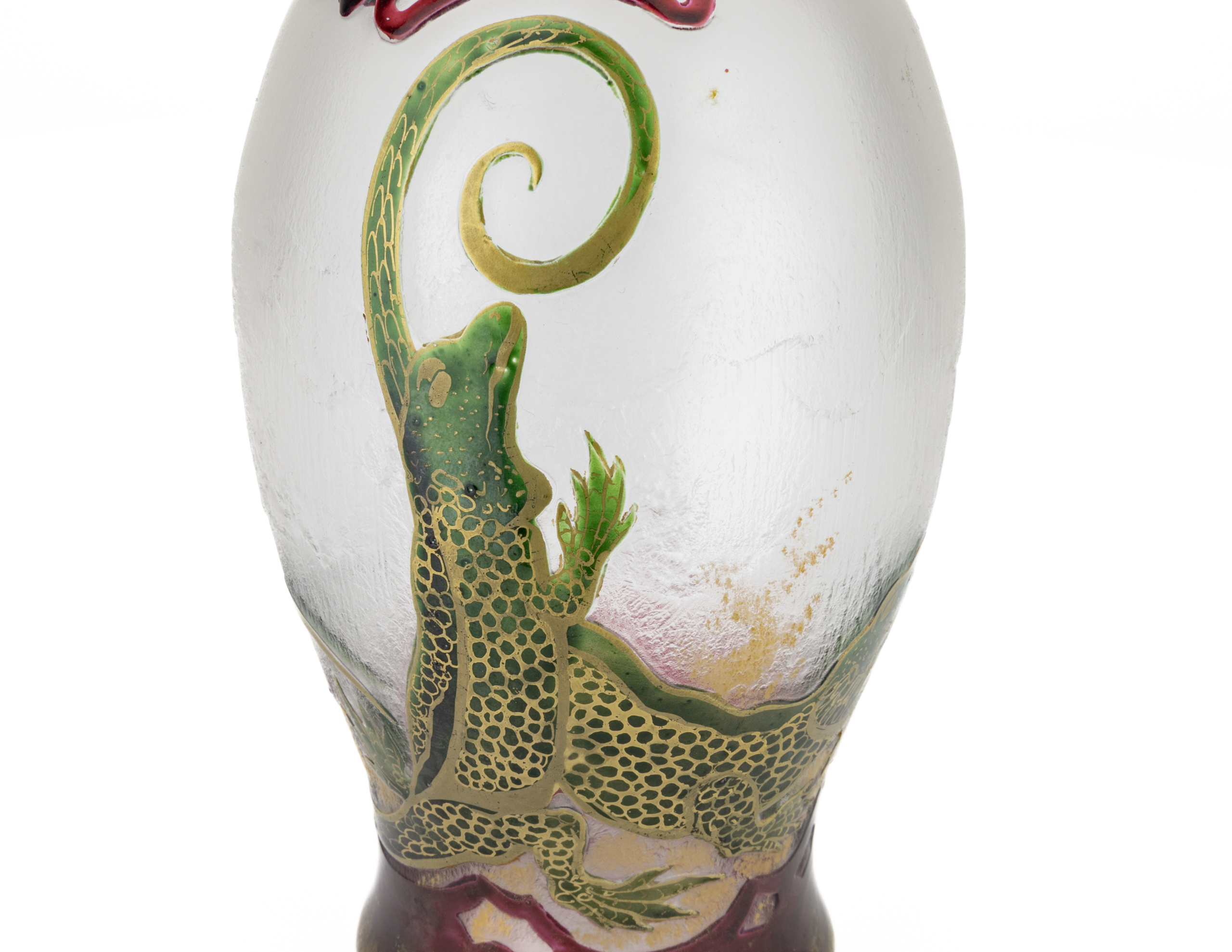
The vase was blown in colourless glass and subsequently overlaid with a layer of deep burgundy-red glass. Through acid etching, sections of this coloured layer were removed to create the composition of two highly stylised lizards moving among vegetal motifs across the surface of the vase. The decoration was subsequently further refined with green and other coloured enamels and richly accented with gold.
Particularly striking is the interplay between the deep burgundy-red glass, the vivid green enamels, the gold highlights and the transparent colourless glass. The acid-etched colourless areas create an open background around the animals, lending the composition a remarkable sense of depth and dimensionality. The elongated bodies and gracefully curling tails of the lizards naturally follow the contours of the vase, further emphasising the organic visual language so characteristic of the Jugendstil.
The combination of technically sophisticated glass refinement, the distinctive animal motif, and the carefully applied enamel and gold decoration makes this vase a particularly fine example of the artistic glass production of Haida around 1900 and a convincing attribution to Carl Goldberg.
Price: This item has been sold.
Interested in this object? Please click here to send us a message using the contact form.